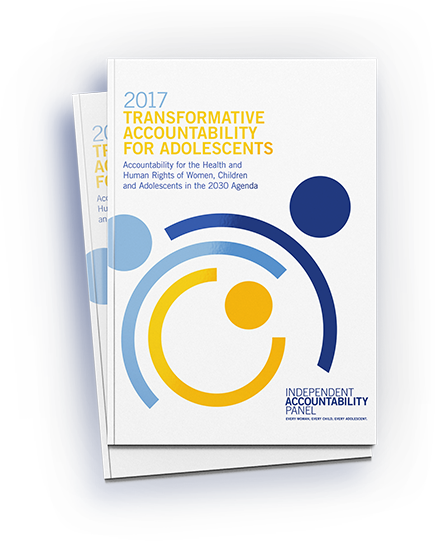
2017 IAP Report – Transformative Accountability for Adolescents
TRANSFORMATIVE ACCOUNTABILITY FOR ADOLESCENTS
Accountability for the Health and Human Rights of Women, Children and Adolescents in the 2030 Agenda
WHAT IS THE IAP REPORT ABOUT?
In line with the mandate from the United Nations Secretary-General, the Independent Accountability Panel (IAP) produces annual reports providing an independent assessment of progress on commitments to women’s, children’s and adolescents’ health and well-being.
The 2017 report focuses on adolescents, who represent a population of approximately 1.2 billion people worldwide and hold a central role in achieving the Sustainable Development Goals.
The report emphasizes that accountability is essential to ensure that commitments translate into real improvements in adolescent health, rights and well-being.
OVERVIEW
The 2017 IAP report calls for a transformation in accountability approaches to accelerate progress under the Global Strategy and the Sustainable Development Goals.
It highlights that without independent accountability and meaningful participation, promises risk losing their impact.
The report stresses the need to:
- Make adolescents visible in data and policy
- Strengthen accountability mechanisms
- Engage young people as active participants in decision-making
- Ensure investments deliver results for adolescents
The IAP accountability framework is based on a continuous cycle of:
- Monitor
- Review
- Act
KEY RECOMMENDATIONS
1. Leverage accountability for the Global Strategy and the SDGs
- Lock in accountability for Every Woman Every Child commitments
- Reduce overlaps and duplication among global partners
2. Make adolescents visible and measure what matters
- Ensure reporting and use of disaggregated data on adolescents
- Develop an adolescent health and well-being index
- Strengthen independent accountability at all levels
3. Foster whole-of-government accountability to adolescents
- Harness demographic dividends by focusing on adolescents and gender equality
- Strengthen education systems to support adolescent well-being
- Ensure effective oversight institutions
4. Make universal health coverage work for adolescents
- Provide essential services including mental health and NCD prevention
- Ensure equitable and free access to key health services
5. Boost accountability for investments, including for adolescents’ health and well-being
- Increase resources and adopt adolescent-responsive budgeting
- Strengthen accountability of development partners
6. Unleash the power of young people
- Ensure meaningful participation of young people in decision-making
- Empower the digital generation to contribute to accountability
LEARN MORE
Submissions to the Report
In response to the IAP’s Call for Evidence, contributions were received from a wide range of stakeholders, including:
- Case studies on national policy and programmes
- Data and evaluation findings
- Examples of accountability mechanisms in practice
Contributions covered areas such as:
- Adolescent health and human rights oversight
- Health services and universal health coverage
- Youth-led accountability initiatives
- Cross-sectoral approaches and education
ADDITIONAL INFORMATION
Follow us
- Press releases
- Webcasts
Feedback
To provide feedback on this report, visit:
or email: editor@gmj.ge
Previous report
👉 2016 IAP Report – Old Challenges, New Hopes
About this archive
This page presents archived content from the 2017 Independent Accountability Panel report and is preserved for research, public health knowledge and accountability purposes.